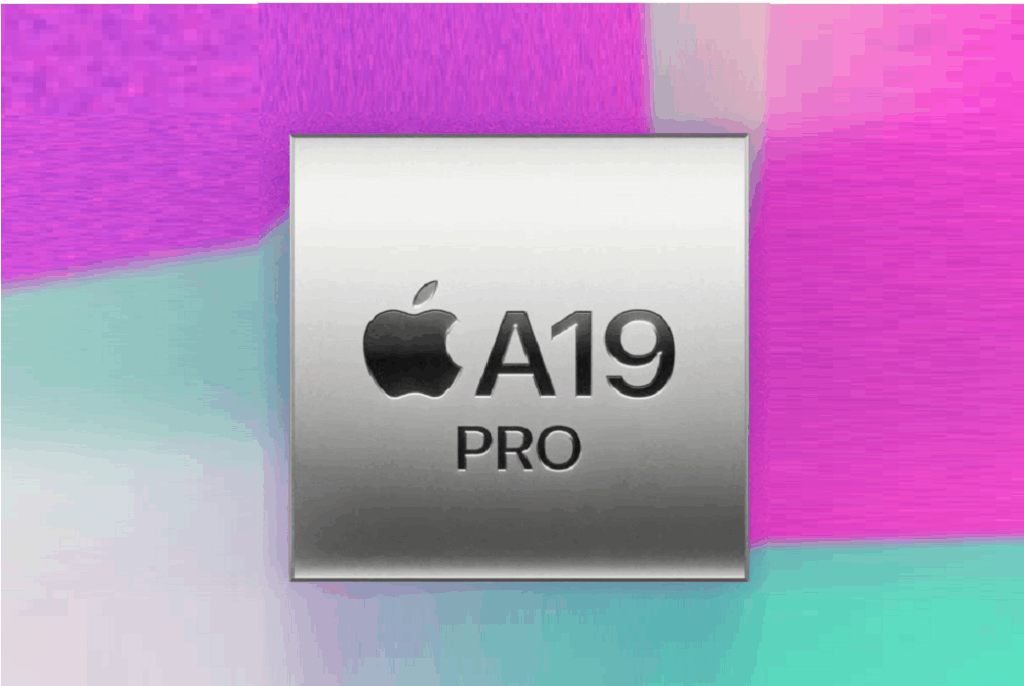
Apple’s newly launched A19 Pro chip, featured in the iPhone 17 series, is shaping up to be a significant advancement in smartphone technology, particularly in artificial intelligence (AI) and on-device processing. The chip is designed to handle complex AI tasks directly on the device, promising faster performance, improved efficiency, and enhanced privacy for users.
According to benchmarks, the A19 Pro delivers roughly 11–12% higher CPU performance compared to its predecessor, the A18 Pro, while its GPU performance has surged by approximately 37%. These upgrades allow the chip to manage demanding AI-driven features more efficiently, supporting tasks such as real-time image recognition, predictive text input, and voice processing without relying heavily on cloud servers.
Industry observers say the improvements in GPU performance will also benefit mobile gaming and graphics-intensive applications. The A19 Pro is capable of rendering high-definition visuals smoothly, giving gamers a better experience on iPhones equipped with the new chip. At the same time, the chip has been designed with energy efficiency in mind, ensuring that the performance boost does not come at the cost of battery life.
Experts note that Apple’s focus on on-device AI reflects a broader trend in the smartphone industry. With more advanced AI applications becoming commonplace, reducing dependence on external servers helps cut latency and enhances data privacy. “The A19 Pro allows users to perform AI tasks instantly, without sending personal data to the cloud,” said a technology analyst.
The iPhone 17 series, which includes the standard iPhone 17, iPhone Air, iPhone 17 Pro, and iPhone 17 Pro Max, will showcase the A19 Pro’s capabilities. While early reviews focus on raw performance numbers, Apple has emphasized that real-world applications such as photography, gaming, and voice-based commands are where the chip will have the most visible impact.
With the A19 Pro, Apple aims to strengthen its lead in smartphone AI and on-device processing, offering users a combination of speed, graphics power, and energy efficiency. Analysts suggest that this move will set new expectations for high-performance AI in mobile devices, particularly as consumers increasingly rely on smartphones for creative and computational tasks.