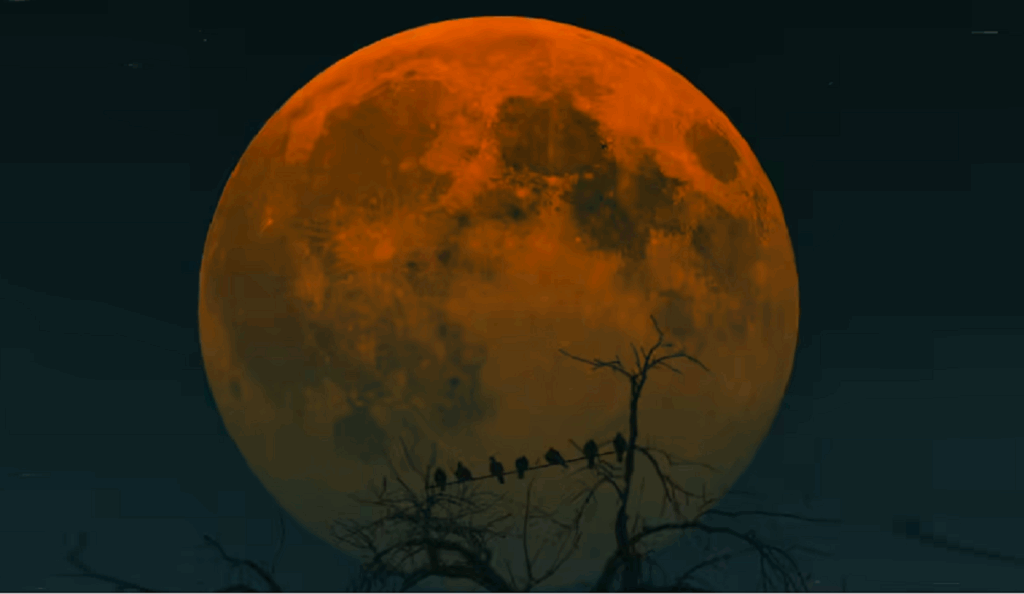
On the night of September 7–8, 2025, skywatchers across India were treated to a spectacular astronomical display—a total lunar eclipse, popularly known as a “Blood Moon”. As Earth’s shadow enveloped the full moon, it transformed into a deep, glowing red, captivating millions from bustling cities to quiet rural landscapes.
The eclipse unfolded over several phases starting in the evening. First, the penumbral phase began as Earth’s faint outer shadow grazed the moon. Soon after, a partial eclipse set the stage for totality—the moment when the moon descended fully into Earth’s dark umbral shadow, casting its copper-hued glow. The most dramatic phase lasted approximately 82 minutes, with peak redness around midnight, before the moon gradually emerged from shadow and drifted onward into normalcy.
Unlike solar eclipses, observing a lunar eclipse required no special eyewear—making it a safe, accessible celestial event for all. Enthusiasts and novices alike gathered on rooftops, balconies, parks, and open spaces, bonding over the shared experience.
This event echoed India’s rich cultural interpretations of celestial phenomena. Many saw it as a moment for reflection, gratitude, or spiritual exercises. Others simply sat in awe, streaming videos, capturing photographs, and marveling at nature’s grand theater.
For those who missed it, the next total lunar eclipse visible from India is scheduled for March 3, 2026. While this upcoming eclipse will be shorter in duration, it promises another mesmerizing spectacle, and a second chance for collective wonder under the night sky.