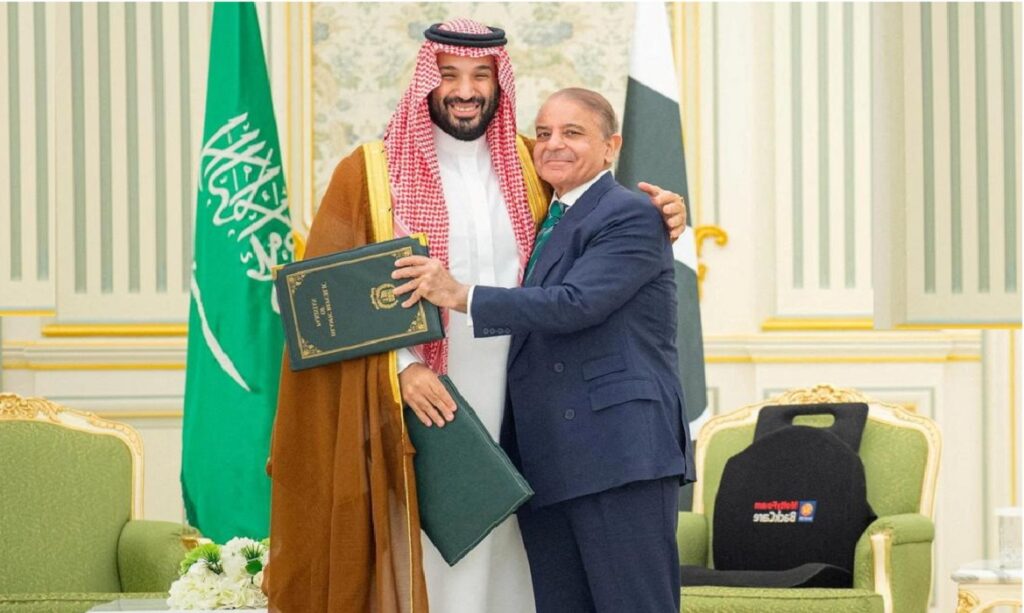
A newly signed Strategic Mutual Defence Agreement (SMDA) between Saudi Arabia and Pakistan has stirred debate among regional analysts, who question whether the pact is more symbolic than substantive. While the deal signals intent to deepen military cooperation, critics argue that both countries have divergent interests which could limit the agreement’s effectiveness.
The SMDA, inked in Saudi Arabia on September 17, formalises commitments that an act of aggression against one country will be considered as one against both. The agreement was signed by Crown Prince Mohammed bin Salman and Pakistani Prime Minister Shehbaz Sharif, with Pakistan’s military also represented. Observers note that although the pact looks like a strong alliance on paper, historical precedents and current geopolitical realities suggest its insurance value may be “dodgy.”
Historically, defence ties between the two countries have waxed and waned. Pakistani troops have served Saudi interests previously, including deployments to protect holy sites, but often with uneasy arrangements—both politically and operationally. Past episodes saw mutual suspicion, constraints on Pakistan’s involvement in Saudi-led operations, and disagreements over command, composition, and purpose of joint forces.
From Saudi Arabia’s perspective, the SMDA appears to be a hedge against increasing regional uncertainty: declining trust in traditional security guarantors, rising tensions with Iran and its proxies, and the evolving dynamics of Gulf politics. The pact offers Riyadh a formal assurance without creating the type of binding commitments that could drag it into unwanted conflicts.
For Pakistan, the pact promises tangible benefits: diplomatic attention, potential economic support, greater access to military hardware, and enhanced regional visibility. Islamabad’s leadership views this as part of its long-standing strategy to leverage its strategic importance for material gain.
Regional implications are complex. India, for its part, remains attentive, given its own relationships with both Saudi Arabia and Pakistan. While Riyadh has reassured New Delhi that it intends balanced ties with all its partners, the new pact could influence security perceptions across West and South Asia. The risk is that symbolic gestures will overshadow practical cooperation: logistics, interoperability, political will, and coordination remain huge challenges.